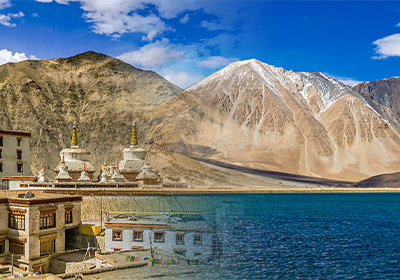
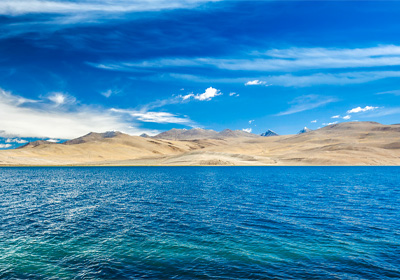
Rise early — sunrise at Pangong is one of the finest moments of the entire journey. Step out of your tent or cottage in the pre-dawn dark, wrap up well (temperatures at the lake drop to 5–8°C even in summer), and watch as the first pale light touches the Changchenmo mountains across the water. The lake turns from black to deep grey to silver to blazing gold over about 20 minutes. No photograph does it justice — but take plenty anyway.
After breakfast, check out and begin the drive back towards Leh via the Chang La Pass route (5,360 m) — the third highest motorable pass in Ladakh, offering sweeping views of the Indus valley as you descend. Today's return is anything but a simple transfer — the Leh–Manali highway corridor is home to three of the most impressive monasteries in all of Ladakh, and visiting all three in sequence makes for one of the finest cultural days of the trip.
Hemis Monastery — 45 km east of Leh. The largest and wealthiest gompa in Ladakh, built in 1672 under royal patronage and belonging to the Drukpa Kagyu school of Tibetan Buddhism. The monastery complex is vast — multiple courtyards, assembly halls, prayer rooms, and thangka galleries. Hemis is particularly famous for its extraordinary collection of gold and silver stupas, ancient Buddhist thangkas (including the largest thangka in existence, displayed every 12 years at the Hemis Festival), and relics of immense religious significance. The annual Hemis Festival (Tse-Chu), held in June or July, is the most famous cultural event in Ladakh — a two-day extravaganza of masked Cham dances performed in the monastery courtyard by monks in elaborate silk costumes and painted masks. Allow 45–60 minutes here.
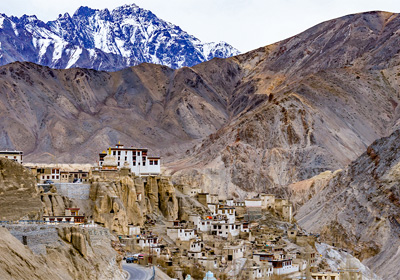
Thiksey Monastery — 19 km east of Leh. One of the most architecturally striking gompas in the Himalayas, Thiksey rises in 12 tiers above a rocky hill, its white-and-ochre walls cascading downward in a composition that unmistakably echoes Lhasa's Potala Palace. Founded in the 15th century, it belongs to the Gelug (Yellow Hat) school and houses around 60 monks. The centrepiece of the complex is a magnificent 15-metre Maitreya (Future) Buddha built in 1980, painted in gold and red, housed in a two-storey chamber. The rooftop terrace offers one of the best panoramic views over the Indus valley in all of Ladakh. The early morning puja (prayer) at Thiksey — attended by monks in maroon robes blowing long trumpets and beating drums in the first light — is extraordinary if you can time it. Allow 45 minutes.
Shey Palace & Monastery — 15 km east of Leh. Once the summer capital of the Ladakhi kings, the Shey Palace complex sits on a rocky hill above the Indus plain and dates primarily to the 17th century. The ruined palace is gradually being restored. The monastery alongside it houses a 12-metre copper-gilt Buddha Shakyamuni — the largest such statue in Ladakh — surrounded by ancient thangkas and murals of remarkable quality. The site carries a melancholy grandeur befitting an abandoned royal seat. The view from the hill above the palace over the Indus valley and towards Thiksey is one of the finest in the region. Allow 30 minutes.
Continue into Leh, arriving by mid-afternoon. Check into your hotel. Free evening — use the time for a final wander through Leh's market, last-minute souvenir shopping, or a quiet dinner at one of the town's excellent rooftop restaurants. Overnight in Leh.